Optometrist vs. Ophthalmologist: Which Eye Doctor Should You See for Your Vision Problems?

Why Do I Keep Getting Pink Eye? Causes of Recurring Conjunctivitis and Treatment
October 16, 2026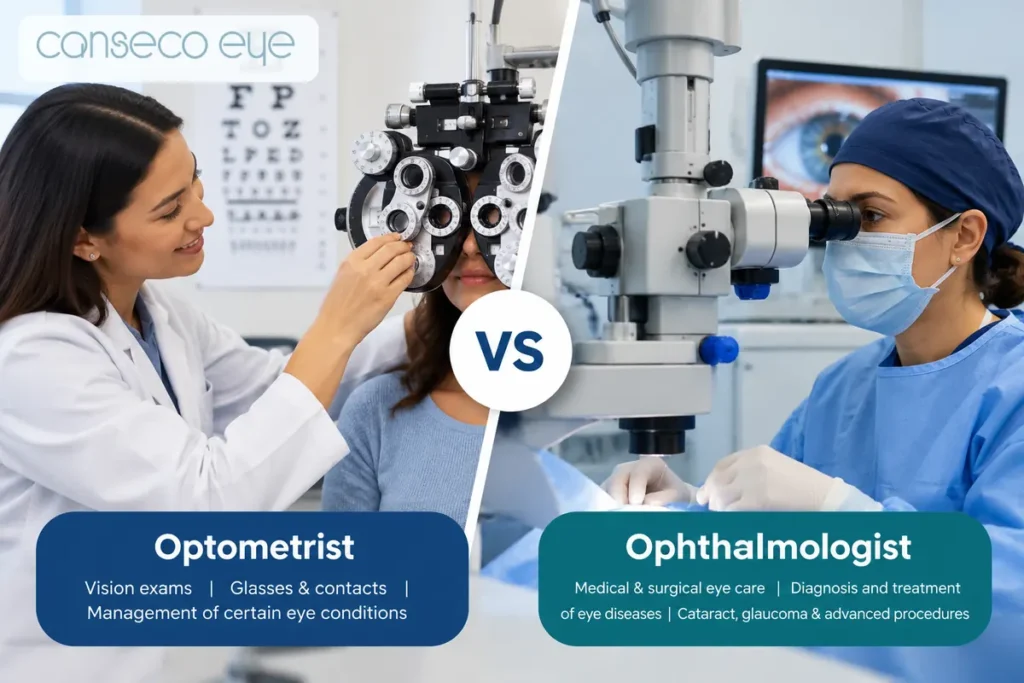
If you need an eye examination, new glasses, or treatment for an eye condition, you may wonder whether to visit an optometrist or an ophthalmologist. Although both are commonly called eye doctors, their medical training, responsibilities, and treatment capabilities differ.
An optometrist primarily provides vision care and manages certain eye conditions, while an ophthalmologist is a medical doctor who can diagnose and treat eye diseases and perform eye surgery. Understanding these differences can help you choose the appropriate specialist for your symptoms.
What Is the Difference Between an Optometrist and an Ophthalmologist?
The main difference between an optometrist and an ophthalmologist involves their education, medical training, and scope of practice.
Optometrists (ODs) complete a Doctor of Optometry degree. They examine vision, prescribe corrective lenses, identify eye abnormalities, and provide treatment for certain eye conditions within their licensed scope of practice.
Ophthalmologists (MDs or DOs) complete medical school followed by specialized medical and surgical training in ophthalmology. They diagnose and manage eye diseases, prescribe medications, perform eye surgery, and provide routine vision care.
Here is a comparison of their responsibilities:
| Eye Care Service | Optometrist | Ophthalmologist |
| Routine eye examinations | Yes | Yes |
| Glasses and contact lens prescriptions | Yes | Yes |
| Diagnosis of eye diseases | Yes | Yes |
| Treatment of eye conditions | Within licensed scope | Yes |
| Cataract surgery | No in Texas | Yes |
| Glaucoma management | Qualified providers | Yes |
| Medical and surgical eye treatment | Nonsurgical care in Texas | Yes |
Both professionals play important roles in maintaining eye health. The appropriate choice depends on the condition and whether specialized medical or surgical treatment is necessary.
What Conditions Can an Optometrist Treat?
Optometrists are often the first point of contact for routine vision problems. Their work extends beyond determining whether someone needs glasses.
Common services include:
- Vision correction: Diagnosing nearsightedness, farsightedness, astigmatism, and presbyopia.
- Contact lens care: Fitting contact lenses and evaluating related vision concerns.
- Routine eye examinations: Assessing visual clarity and checking for signs of eye disease.
- Dry eyes and allergies: Evaluating symptoms and recommending appropriate treatment.
- Eye disease monitoring: Detecting and managing certain conditions within their professional qualifications.
In Texas, therapeutic optometrists can prescribe medications and treat specified eye diseases. Optometric glaucoma specialists have additional certification that permits glaucoma treatment within state regulations.
However, optometrists do not perform eye surgery in Texas.
When Should You See an Ophthalmologist Instead?
An ophthalmologist may be more appropriate when symptoms suggest a complex eye condition, vision continues worsening, or surgical treatment may be necessary.
1. Cataracts
Cataracts develop when the eye’s natural lens becomes cloudy. If blurred vision, glare, or difficulty driving at night affects daily activities, an ophthalmologist can evaluate whether cataract surgery is appropriate.
2. Glaucoma
Glaucoma can damage the optic nerve, sometimes without noticeable early symptoms. An ophthalmologist can assess optic nerve health and recommend medications, laser procedures, or surgery when needed.
3. Unexplained Vision Changes
Persistent blurry vision, distorted images, or vision problems that cannot be corrected with glasses may require additional testing to identify the underlying condition.
4. Eye Injuries and Complex Conditions
Significant eye injuries, corneal disorders, and retinal diseases may require specialized medical evaluation.
5. Eye Surgery
Procedures such as cataract surgery and certain glaucoma treatments require an ophthalmologist with appropriate surgical training.
An ophthalmologist can also perform routine eye exams. You do not necessarily need to have a serious condition to see one.
Which Eye Doctor Should You Visit Based on Your Symptoms?
Choosing between an optometrist and an ophthalmologist becomes easier when you consider your symptoms and their severity.
| Your Concern | Appropriate Next Step |
| Need new glasses or contact lenses | Optometrist |
| Gradual blurry vision | Optometrist or ophthalmologist |
| Persistent dry or irritated eyes | Either, depending on severity |
| Suspected cataracts affecting daily life | Ophthalmologist for surgical evaluation |
| Glaucoma diagnosis or ongoing monitoring | Qualified optometrist or ophthalmologist |
| Persistent eye pain or unusual redness | Prompt eye examination |
| Sudden vision loss or severe eye pain | Immediate emergency assessment |
| New flashes, many floaters, or a dark curtain over vision | Immediate emergency assessment |
Does Blurry Vision Always Require an Ophthalmologist?
Not necessarily. Blurry vision can result from a simple change in your glasses prescription, but it may also indicate cataracts, dry eye disease, diabetes-related eye changes, or other conditions.
An optometrist can evaluate many common causes of blurred vision and refer you when specialized treatment is needed.
However, sudden vision loss should never be treated as a routine prescription problem. It requires immediate medical assessment.
Can an Optometrist Refer You to an Ophthalmologist?
Yes. Optometrists and ophthalmologists frequently work together to provide appropriate eye care.During an examination, an optometrist may identify signs of cataracts, glaucoma, retinal abnormalities, or another condition requiring specialized evaluation.For example, a patient experiencing progressively cloudy vision may initially visit an optometrist for updated glasses. If the examination reveals visually significant cataracts, the optometrist may recommend an ophthalmologist for surgical assessment.
Similarly, an ophthalmologist may coordinate follow-up care with an optometrist after treatment.This collaborative approach helps patients receive appropriate care without assuming every eye problem requires surgery.
At Canseco Eye, we believe exceptional eye care is a team effort. We work closely with our referring optometric colleagues throughout Houston, collaborating both in and outside the clinic to ensure patients receive thoughtful, coordinated care. We value these relationships and recognize that working together allows us to provide the best possible experience for our patients.
Think of us as the friendly ophthalmologist your favorite optometrist knows and trusts.
Whether a referral is required for an appointment may also depend on the patient’s insurance plan
How Do You Choose the Right Eye Doctor in Houston?
When looking for an eye doctor in Houston, consider the type of examination or treatment you need rather than relying only on the provider’s title.
Before scheduling, consider these questions:
- Does the provider offer examinations for your particular symptoms?
- Do you need routine vision correction or medical eye treatment?
- Does the provider have experience managing your diagnosed eye condition?
- Will additional testing or surgical evaluation be necessary?
- Does your insurance cover the provider and required services?
For patients with cataracts, glaucoma, or complex anterior segment conditions, an ophthalmologist with relevant training may be appropriate.
At Canseco Eye in Houston, Dr. Elvia Canseco is a board-certified, fellowship-trained ophthalmologist whose clinical expertise includes cataract surgery, complex anterior segment procedures, and minimally invasive glaucoma surgery.
Patients can also review the available eye care services in Houston to understand which examinations and treatments address their concerns.
Ultimately, the goal is to choose a qualified professional who can identify the cause of your symptoms and provide or coordinate suitable treatment.
Frequently Asked Questions
1. Is an optometrist considered an eye doctor?
Yes. An optometrist is an eye doctor who holds a Doctor of Optometry (OD) degree. Optometrists examine vision, prescribe glasses and contact lenses, and diagnose or treat certain eye conditions. However, they are not medical physicians, unlike ophthalmologists, who hold MD or DO degrees.
2. Should I see an optometrist or ophthalmologist for blurry vision?
Either professional may evaluate blurry vision, depending on its cause. An optometrist is often appropriate for routine prescription changes. An ophthalmologist may be needed when blurry vision involves cataracts, retinal disease, or other complex conditions. Sudden vision loss requires emergency assessment.
3. Can an optometrist diagnose glaucoma or cataracts?
Yes. Optometrists can identify signs of glaucoma and cataracts during eye examinations. In Texas, specially certified optometric glaucoma specialists can also manage certain glaucoma cases. However, cataract surgery and surgical glaucoma treatments are performed by ophthalmologists.
4. Do I need an ophthalmologist for a routine eye exam?
Not always. Both optometrists and ophthalmologists perform routine eye examinations. An optometrist is often suitable for vision correction and general eye health assessments. Patients with existing eye diseases, complex medical histories, or surgical concerns may benefit from seeing an ophthalmologist.
5. Can I visit an ophthalmologist without seeing an optometrist first?
Yes. You can generally schedule an ophthalmology appointment without first visiting an optometrist. However, some insurance plans require a referral. If you have unexplained vision changes, known eye disease, or concerns requiring specialized care, contacting an ophthalmologist directly may be appropriate.
Final Thoughts
An optometrist and an ophthalmologist both contribute to protecting vision, but their roles are not identical. Routine vision needs can often be managed by an optometrist, while complex eye diseases and surgical treatment may require an ophthalmologist.
Understanding these differences helps you make informed decisions about your eye health and seek appropriate care when symptoms change.