Why Do I Keep Getting Pink Eye? Causes of Recurring Conjunctivitis and Treatment

Optometrist vs. Ophthalmologist: Which Eye Doctor Should You See for Your Vision Problems?
October 24, 2026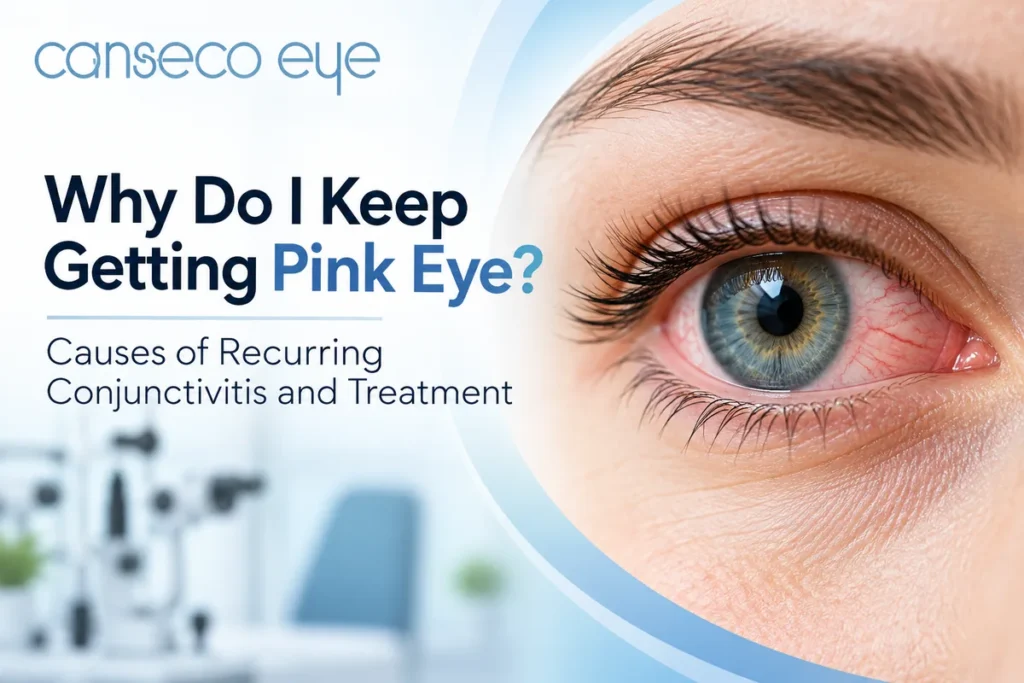
Recurring pink eye can occur due to repeated infections, allergies, chronic eyelid inflammation, dry eyes, or contact lens-related irritation. If you frequently experience redness, itching, discharge, or discomfort, the underlying cause may not have been fully identified or treated. Chronic pink eye and recurring conjunctivitis are not always caused by infections. Understanding why your symptoms keep returning is important for choosing the right treatment and preventing future episodes.
What Is Chronic or Recurring Pink Eye?
Chronic or recurring pink eye refers to conjunctivitis symptoms that persist for an extended period or return repeatedly. Conjunctivitis occurs when the conjunctiva, the thin membrane covering the white part of the eye and inner eyelids, becomes inflamed.
Chronic pink eye involves persistent inflammation that may last several weeks or longer. Recurring pink eye describes separate episodes of redness, irritation, or discharge that improve but return later.
While both conditions can cause similar symptoms, their underlying causes may differ. Repeated symptoms do not always indicate an infection, making an accurate diagnosis important for effective treatment.
Why Do I Keep Getting Pink Eye?
Frequent pink eye symptoms do not always mean you are catching the same infection repeatedly. Several conditions can cause redness, watering, itching, and discharge.
1. Viral Infections: Viruses, including adenoviruses, can spread through contaminated hands, towels, or close contact. A new exposure may cause another episode.
2. Bacterial Infections: Certain bacteria can trigger conjunctivitis, especially when eye hygiene is poor or contaminated products are used. Persistent symptoms may require reassessment rather than repeated antibiotic drops.
3. Allergies: Pollen, dust mites, and pet dander can cause recurring itchy, watery, red eyes. Allergic conjunctivitis is not contagious.
4. Blepharitis: Inflammation along the eyelid margins can irritate the eye surface and contribute to repeated conjunctivitis-like symptoms.
5. Dry Eyes: An unstable tear film can cause burning, redness, and a gritty sensation that may be mistaken for pink eye.
6. Contact Lens Problems: Overwearing lenses, sleeping in them, or poor cleaning practices can cause irritation or infection.
Because these causes need different treatments, an eye examination is important when symptoms keep returning. Contact lens wearers with pain, light sensitivity, or blurred vision should seek prompt care to protect their vision.
Why Does Pink Eye Keep Coming Back in Only One Eye?
Recurring pink eye in one eye may indicate an underlying problem affecting that eye rather than repeated infections. Possible causes include chronic eyelid inflammation, a trapped eyelash or foreign body, contact lens irritation, or blocked tear drainage. Certain viral infections, including herpes simplex, can also cause recurring symptoms in the same eye.
Because repeated redness does not always indicate conjunctivitis, an ophthalmologist may examine the eyelids, tear drainage system, and cornea to identify the cause.
If symptoms repeatedly affect only one eye, seek an eye examination rather than relying on leftover eye drops. Eye pain, light sensitivity, or vision changes require urgent medical attention.
How Is Recurring Pink Eye Diagnosed?
Diagnosing recurring pink eye begins with a detailed eye examination and review of your medical history. An ophthalmologist will ask about previous infections, symptom frequency, contact lens use, allergies, and past treatments.
The examination may include checking the conjunctiva, cornea, eyelids, and tear film for signs of inflammation, infection, or irritation. A slit-lamp examination helps identify abnormalities that may not be visible otherwise.
In persistent or unusual cases, laboratory testing may be recommended to identify infectious causes.
Consulting an experienced eye doctor in Houston can help determine why symptoms keep returning and guide appropriate treatment.
What Is the Best Treatment for Chronic Pink Eye?
The best treatment for chronic pink eye depends on its underlying cause. Since recurring symptoms are not always caused by an infection, proper diagnosis is essential before starting treatment.
1. Bacterial Conjunctivitis: An ophthalmologist may prescribe antibiotic eye drops or ointments when necessary. Mild bacterial infections sometimes resolve without antibiotics.
2. Viral Conjunctivitis: Most cases improve naturally. Artificial tears and cold compresses can relieve discomfort. Certain viral infections, such as herpes-related infections, require specific antiviral treatment.
3. Allergic Conjunctivitis: Antihistamine eye drops, avoiding allergens, and cold compresses can help control itching, redness, and watering.
4. Blepharitis: Warm compresses, gentle eyelid cleaning, and prescribed medications when needed may help manage recurring inflammation.
5. Dry Eye-Related Irritation: Lubricating eye drops and treatment of underlying tear film problems can improve symptoms.
If pink eye repeatedly returns after treatment, avoid reusing leftover antibiotic or steroid eye drops without medical advice. A complete eye examination can help identify the cause and prevent inappropriate treatment.
How Can You Prevent Pink Eye From Coming Back?
Preventing recurring pink eye involves maintaining good eye hygiene and addressing the underlying causes of repeated irritation or infection.
- Practice Good Hygiene: Wash your hands regularly and avoid touching or rubbing your eyes.
- Avoid Sharing Personal Items: Do not share towels, pillowcases, eye makeup, or contact lens accessories.
- Maintain Contact Lens Hygiene: Clean and replace lenses as directed. Never sleep in lenses unless specifically prescribed.
- Avoid Allergens and Irritants: Limit exposure to dust, pollen, smoke, and products that trigger eye irritation.
- Manage Underlying Conditions: Follow recommended treatment for allergies, blepharitis, or dry eyes.
Persistent or recurring symptoms require professional evaluation.
When Should You See an Ophthalmologist?
Repeated pink eye episodes should be evaluated, especially when symptoms persist despite treatment or repeatedly affect the same eye. Seek urgent medical attention if you experience eye pain, light sensitivity, blurred vision, or worsening redness.
According to Dr. Elvia Canseco, a board-certified, fellowship-trained ophthalmologist, identifying the underlying cause of recurring eye symptoms is important for determining appropriate treatment.
An examination by an ophthalmologist in Houston, TX can help distinguish recurring conjunctivitis from other eye conditions, including dry eye disease, blepharitis, and corneal inflammation.
Frequently Asked Questions About Recurring Pink Eye
1. Can you get conjunctivitis more than once?
Yes, you can get conjunctivitis multiple times. Recovering from one episode does not always prevent future infections. Repeated exposure to viruses, bacteria, or allergens can trigger new episodes. If pink eye frequently returns, an eye examination can help identify possible underlying causes.
2. Why do I get pink eye so much as an adult?
Frequent pink eye in adults may result from recurring infections, seasonal allergies, blepharitis, dry eyes, or improper contact lens care. Sometimes, conditions that cause eye redness are mistaken for conjunctivitis. Identifying the actual cause is important for preventing repeated symptoms.
3. Is recurring pink eye always contagious?
No, recurring pink eye is not always contagious. Viral and bacterial conjunctivitis can spread between people, while allergic conjunctivitis and irritation caused by dry eyes are not contagious. Whether pink eye can spread depends on its underlying cause rather than how frequently symptoms occur.
4. Can chronic pink eye go away without treatment?
Some mild cases of conjunctivitis improve without medication, particularly those caused by common viruses. However, persistent or recurring symptoms may indicate allergies, eyelid inflammation, or another eye condition requiring treatment. Chronic redness should be evaluated rather than ignored, especially if symptoms worsen.
5. Why does conjunctivitis keep returning after treatment?
Conjunctivitis may return when the underlying cause remains unresolved, a new infection occurs, or the original condition was misdiagnosed. Allergies, blepharitis, and contaminated contact lenses can also contribute to repeated symptoms. If redness returns after treatment, further examination may be necessary to determine the cause.